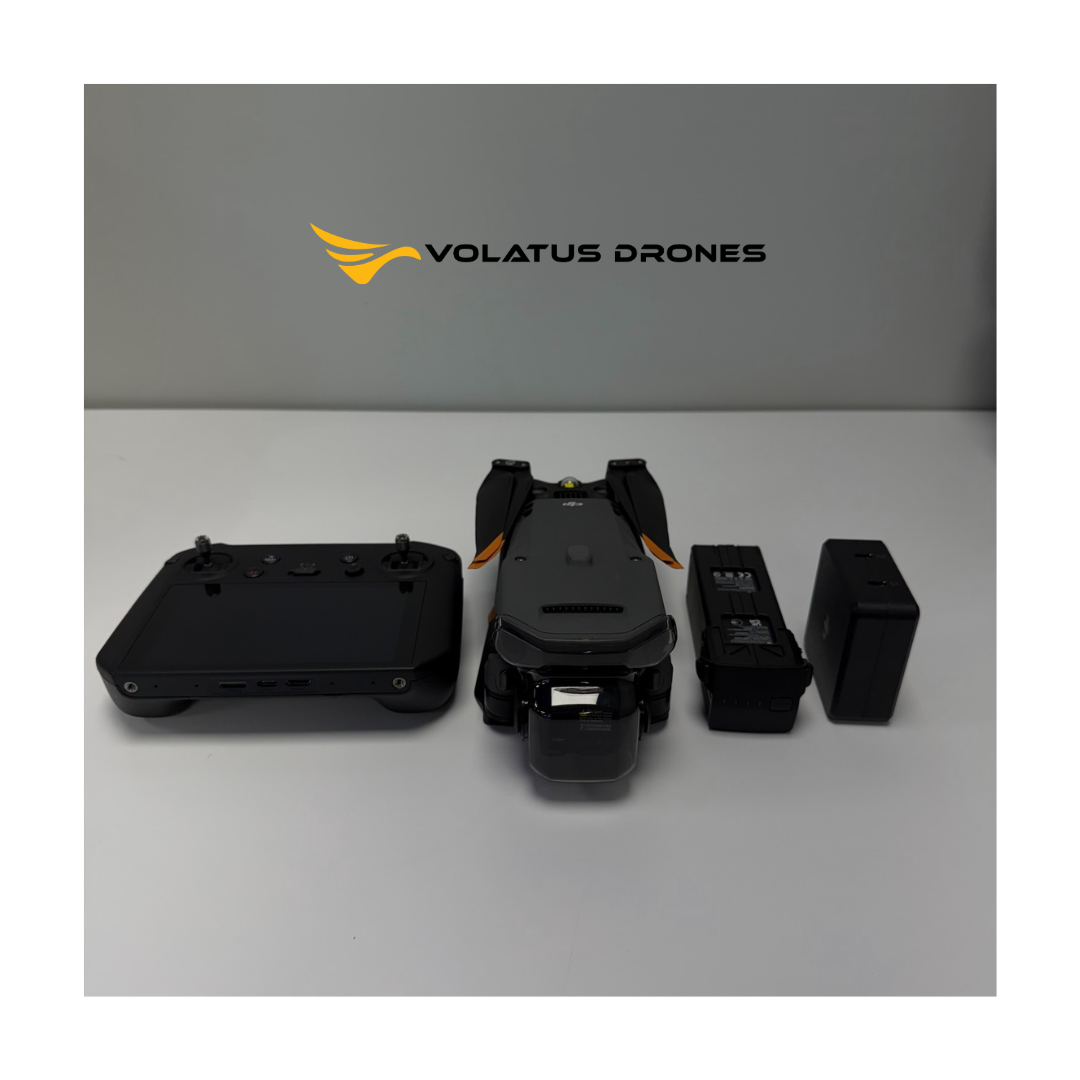
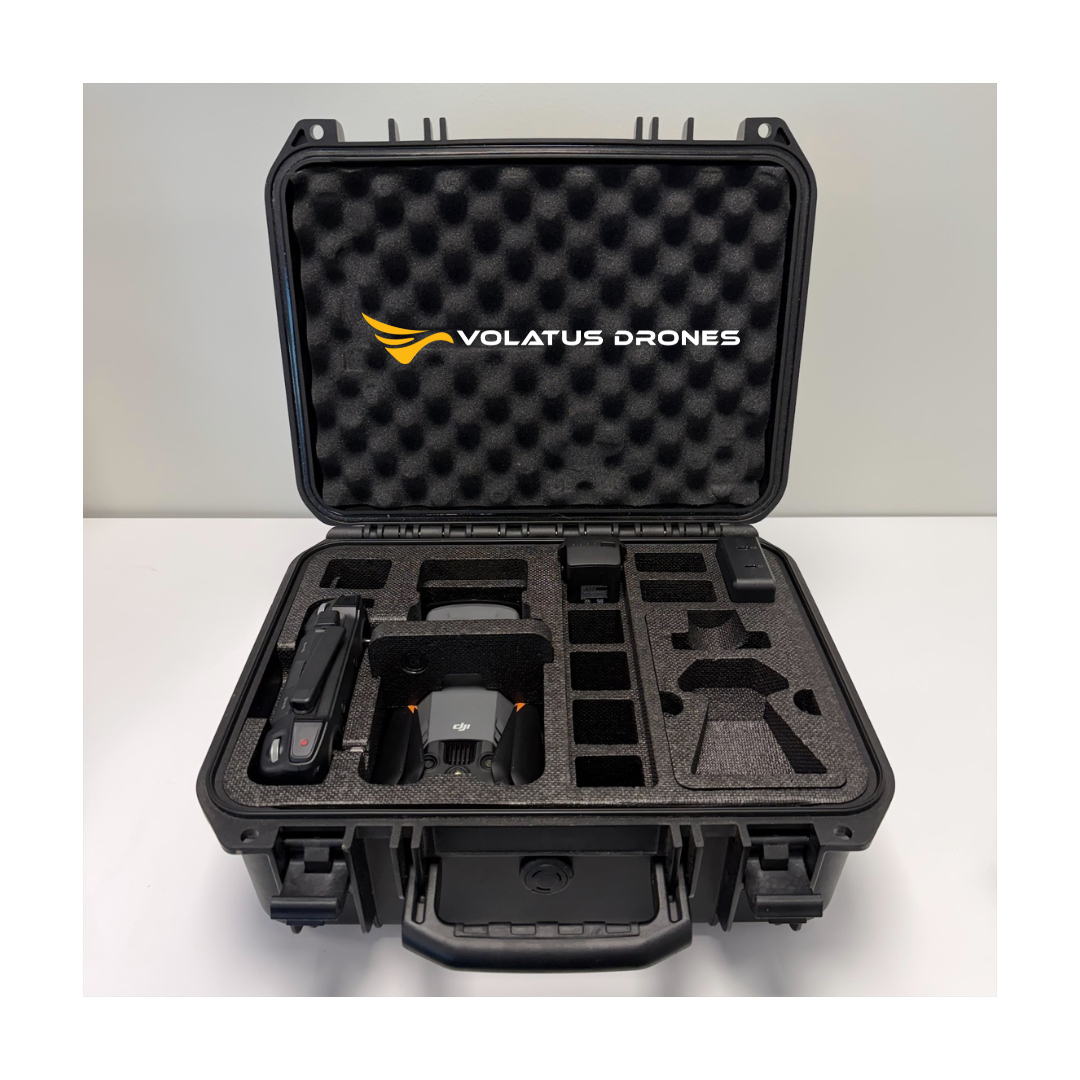
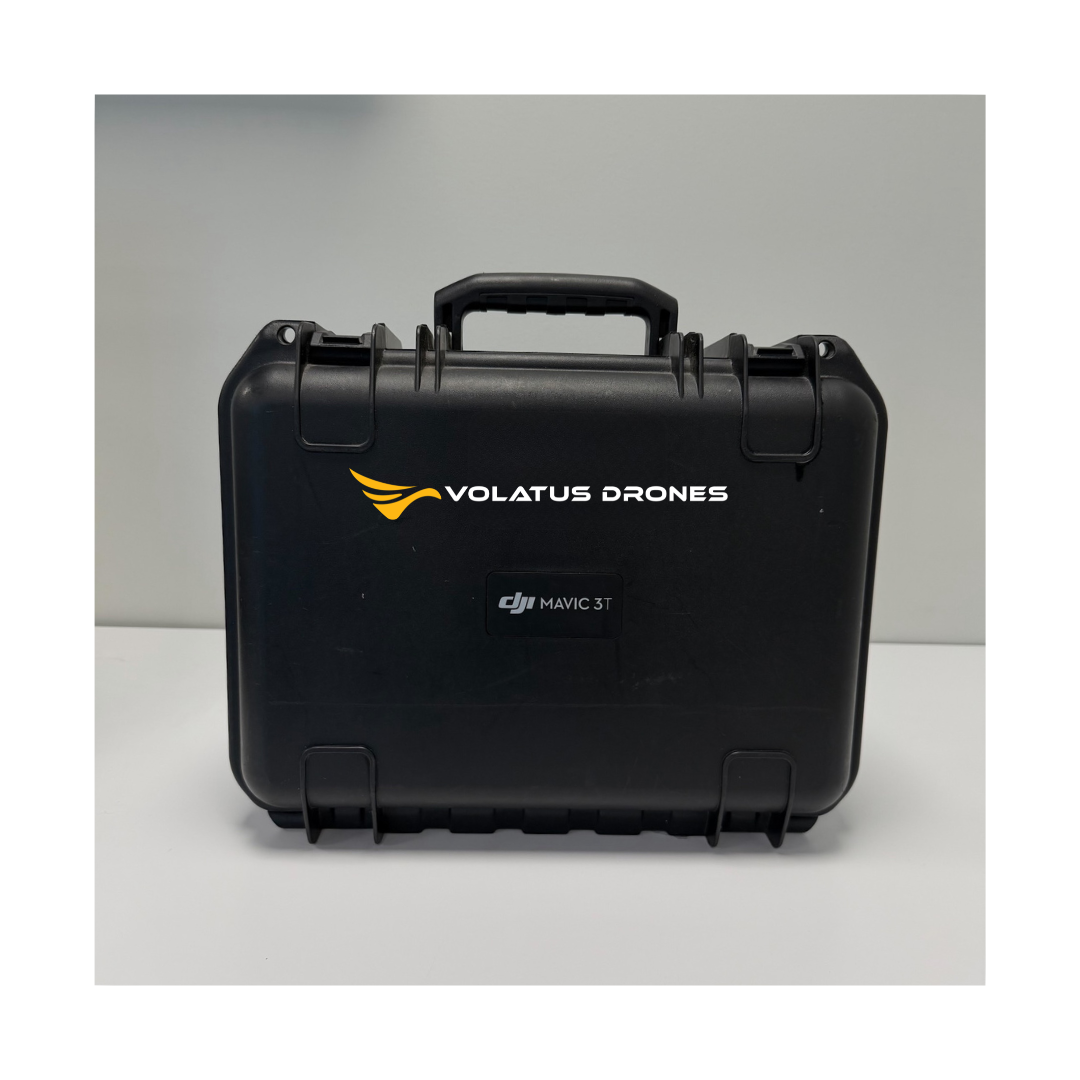


Focus and Find
Equipped with a 12MP zoom camera, supporting up to 56× max hybrid zoom to see essential details from afar.
See the Unseen
Mavic 3T's thermal camera has 640 × 512 resolution and supports point and area temperature measurement, high temperature alerts, color palettes, and isotherms to help you find your targets and make quick decisions. Making the M3T suitable for night patrol, abnormal temperatures detection, power grid and solar farm inspection, SAR, and firefighting missions.
Simultaneous Split-Screen Zoom
Thermal and zoom cameras support 28× continuous side-by-side zoom for easy comparisons.
Exceptional Operational Efficiency
Batteries optimized for endurance. 45-min flight durations let you cover more ground each mission, for surveying of up to 2 square kilometers in a single flight. Fast charge batteries with 100W charging hub, or directly charge the drone with 88W fast charging.
Omnidirectional Sensing for Safe Flying
Equipped with wide-angle lenses on all sides for omnidirectional obstacle avoidance with zero blind spots. Adjust proximity alarms and braking distance depending on mission requirements. Advanced RTH automatically plans the optimal route home, saving power, time, and hassle. APAS 5.0 enables automatic rerouting around obstacles, so you can fly with peace of mind.
Next-Generation Image Transmission
Quad-antenna O3 Enterprise Transmission enables more stable connections in a wide variety of complex environments.
Full Software Suite
DJI Pilot 2 - A revamped Enterprise flight interface designed to improve piloting efficiency and flight safety. Drone and payload controls can be easily accessed with one tap. Clear presentation of flight details and navigational information improves user experience together with support for various route types.
DJI FlightHub 2 - All-in-one cloud drone operations management for your fleet with support for live annotations and cloud mapping for seamless ground-to-cloud synergy. Efficiently manage inspection operations with route planning and mission management.
DJI Terra - Full featured mapping software for all stages of work, from mission planning to processing of 2D and 3D models.
DJI Thermal Analysis Tool 3.0 - Analyze, annotate, and process images captured by M3T using DTAT 3.0 to detect temperature abnormalities in your inspections.
User Data Security - Local Data Mode | One-Tap Clear All Device Data | AES-256 Video Transmission Encryption | Cloud API
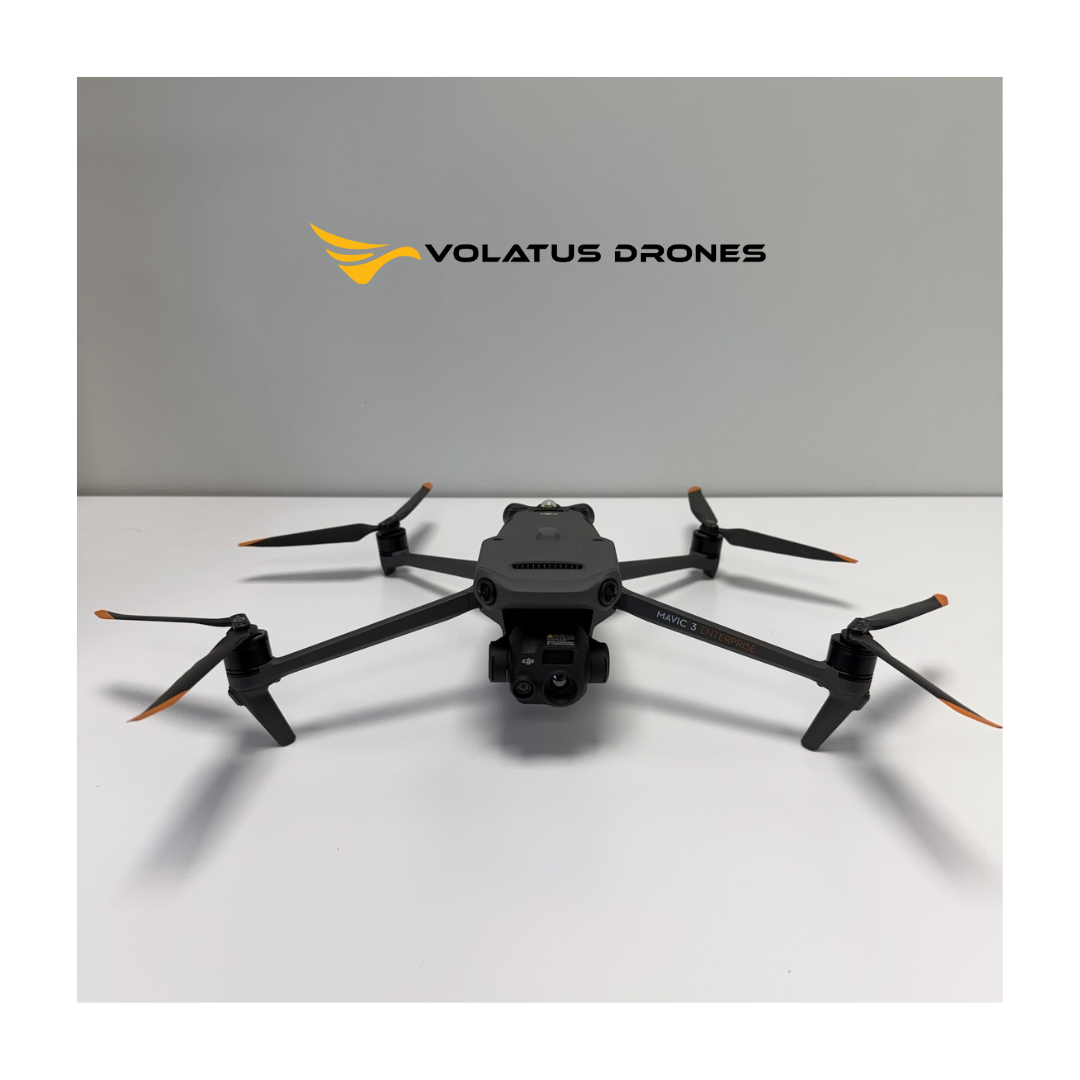
DJI Mavic 3T - Your Everyday Commercial Drone
- Mavic 3 Enterprise Series include two models: M3E (Mavic 3 Enterprise) and M3T (Mavic 3 Thermal).
- With RTK module and mechanical shutter, M3E can achieve centimeter-level mapping accuracy, which is a significant improvement compared to decimeter-level accuracy of the consumer Mavic 3 (No RTK and electronic shutter only). In addition, M3E uses DJI Pilot 2 app, which can be used for route planning and mission flight. Compared with the DJI Fly app, which is used to control consumer Mavic 3, Pilot 2 pilot has more enterprise features.
- M3T integrates 640*512@30Hz thermal camera, which can be used for night patrol and abnormal temperatures detection, suitable for power grid inspection, solar farm inspection, SAR, firefighting, etc.
- Regarding the camera spec, both M3E & M3T support 56x hybrid zoom, while Mavic 3 supports 28x hybrid zoom. The minimal photo interval of M3E wide camera is improved to 0.7 seconds, which significantly improves the mapping efficiency.
- Mavic 3 Enterprise Series provide RTK, speaker and support both MSDK and PSDK for 3rd party software and hardware, which can meet the different types of requirements of enterprise users.
What are the improvements of M3E compared to P4R?
- Longer Endurance and Higher Efficiency: M3E supports maximum 42min flight time (with RTK module), 15m/s flight speed and 0.7s minimum photo interval, while P4R supports maximum 30min flight time, 13m/s flight speed and 2.5s minimum photo interval. So, the M3E can complete over 2 square kilometers 2D mapping area in a single flight (GSD=5cm), which is 2 times that of the P4R. (When the GSD is smaller, the advantage of M3E is greater. When GSD=1cm, the efficiency of M3E is 7 times that of P4R.)
- Better Photo Quality: The 4/3-inch CMOS sensor of M3E brings better color reproduction and better noise reduction in low light.
- Improved Flight Safety: M3E integrates Multiple wide-angle vision sensors which provides omnidirectional obstacle sensing. The flight is safer and more reliable.
- More Stable Video Transmission: M3E incorporates O3 Enterprise video transmission technology, which offers maximum 15km (FCC standard) transmission distance and 1080P low-latency video.
- The altitude limit is increased from 500 meters to 1500 meters, supports panoramic photography, and more powerful controller.
What are the improvements of M3T compared to M2EA?
- Longer endurance: M3E supports maximum 45min flight endurance, while M2EA supports maximum 31min flight time. The longer flight time of the M3T can greatly improve the operation efficiency in the inspection scenario.
- Tele Camera: Compared to the M2EA which integrates wide and infrared camera, the M3E has an additional zoom camera that can be used for long-distance scouting.
- Improved Flight Safety: M3T integrates Multiple wide-angle vision sensors which provides omnidirectional obstacle sensing. The flight is safer and more reliable.
- More Stable Video Transmission: M3T incorporates O3 Enterprise video transmission technology, which offers maximum 15km (FCC standard) transmission distance and 1080P low-latency video.
- Support FH2: Livestreaming, Coordinate synchronization, Media file sharing
What is the mapping accuracy of M3E?
M3E GCP-free accuracy is about 2 times that of GSD. For example, at 100m flight height, GSD=H/37=2.7cm, accuracy is within 5.4 cm
Which industries are Mavic 3 Enterprise Series suitable for?
M3E is suitable for surveying and mapping, power grid inspection, wind farm inspection, etc. M3T is suitable for power grid inspection, solar farm inspection, SAR, firefighting, etc.
Which apps are compatible with Mavic 3 Enterprise Series?
DJI Pilot2 and 3rd party app via MSDK.
Does Mavic 3 Enterprise Series support SDK?
Support MSDK, PSDK and Cloud API.
Comparison between Mavic 3 Enterprise Series, M30 Series and M300 RTK
- M3E/M3T: Foldable and compact design, easy to carry, entry-level enterprise drone.
- M30/M30T: 16x optical zoom and LRF, IP55, powerful RC Plus, suitable for customers who have high requirements for the zoom performance, ingress protection and flight control experience.
- M300: Support mounting H20 series, P1, L1 and variety o 3rd party payloads, suitable for customers who have high requirement for payload.
Specifications
| Aircraft | |
| Weight (with propellers, without accessories) [1] | |
| DJI Mavic 3E: 915 g | |
| DJI Mavic 3T: 920 g | |
| Max Takeoff Weight | |
| DJI Mavic 3E: 1,050 g | |
| DJI Mavic 3T: 1,050 g | |
| Dimensions | |
| Folded (without propellers): 221×96.3×90.3 mm (L×W×H) | |
| Unfolded (without propellers): 347.5×283×107.7 mm (L×W×H) | |
| Diagonal Distance | |
| 380.1 mm | |
| Max Ascent Speed | |
| 6 m/s (Normal Mode) | |
| 8 m/s (Sport Mode) | |
| Max Descent Speed | |
| 6 m/s (Normal Mode) | |
| 6 m/s (Sport Mode) | |
| Max Flight Speed (at sea level, no wind) | |
| 15 m/s (Normal Mode) | |
| Forward: 21 m/s, Side: 20 m/s, Backward: 19 m/s (Sport Mode) [2] | |
| Max Wind Speed Resistance | |
| 12 m/s [3] | |
| Max Take-off Altitude Above Sea Level | |
| 6000 m (without payload) | |
| Max Flight Time (no wind) | |
| 45 mins [4] | |
| Max Hover Time (no wind) | |
| 38 mins | |
| Max Flight Distance | |
| 32 km | |
| Max Tilt Angle | |
| 30° (Normal Mode) | |
| 35° (Sport Mode) | |
| Max Angular Velocity | |
| 200°/s | |
| GNSS | |
| GPS+Galileo+BeiDou+GLONASS (GLONASS is supported only when the RTK module is enabled) | |
| Hovering Accuracy | |
| Vertical: ±0.1 m (with Vision System); ±0.5 m (with GNSS); ±0.1 m (with RTK) | |
| Horizontal: ±0.3 m (with Vision System); ±0.5 m (with High-Precision Positioning System); ±0.1 m (with RTK) | |
| Operating Temperature Range | |
| -10° to 40° C (14° to 104° F) | |
| Internal Storage | |
| N/A | |
| Motor Model | |
| 2008 | |
| Propeller Model | |
| 9453F Propellers for Enterprise | |
| Beacon | |
| Built into the aircraft | |
| Wide Camera | |
| Sensor | |
| DJI Mavic 3E: 4/3 CMOS, Effective pixels: 20 MP | |
| DJI Mavic 3T: 1/2-inch CMOS, Effective pixels: 48 MP | |
| Lens | |
| DJI Mavic 3E: | |
| FOV: 84° | |
| Format Equivalent: 24 mm | |
| Aperture: f/2.8-f/11 | |
| Focus: 1 m to ∞ | |
| DJI Mavic 3T: | |
| FOV: 84° | |
| Format Equivalent: 24 mm | |
| Aperture: f/2.8 | |
| Focus: 1 m to ∞ | |
| ISO Range | |
| DJI Mavic 3E: 100-6400 | |
| DJI Mavic 3T: 100-25600 | |
| Shutter Speed | |
| DJI Mavic 3E: | |
| Electronic Shutter: 8-1/8000 s | |
| Mechanical Shutter: 8-1/2000 s | |
| DJI Mavic 3T: | |
| Electronic Shutter: 8-1/8000 s | |
| Max Image Size | |
| DJI Mavic 3E: 5280×3956 | |
| DJI Mavic 3T: 8000×6000 | |
| Still Photography Modes | |
| DJI Mavic 3E: | |
| Single: 20 MP | |
| Timed: 20 MP | |
| JPEG: 0.7/1/2/3/5/7/10/15/20/30/60 s | |
| JPEG+RAW: 3/5/7/10/15/20/30/60 s | |
| Smart Low-light Shooting: 20 MP | |
| Panorama: 20 MP (raw image) | |
| DJI Mavic 3T: | |
| Single: 12 MP/48 MP | |
| Timed: 12 MP/48 MP | |
| JPEG: 2/3/5/7/10/15/20/30/60 s* | |
| Panorama: 12 MP (raw image); 100 MP (stitched image) | |
| Smart Low-light Shooting: 12 MP | |
| * Shooting 48MP photo does not support 2s interval | |
| Video Resolution | |
| H.264 | |
| 4K: 3840×2160@30fps | |
| FHD: 1920×1080@30fps | |
| Bitrate | |
| DJI Mavic 3E: | |
| 4K: 130 Mbps | |
| FHD: 70 Mbps | |
| DJI Mavic 3T: | |
| 4K: 85 Mbps | |
| FHD: 30 Mbps | |
| Supported File Formats | |
| exFAT | |
| Photo Format | |
| DJI Mavic 3E: JPEG/DNG (RAW) | |
| DJI Mavic 3T: JPEG | |
| Video Format | |
| MP4 (MPEG-4 AVC/H.264) | |
| Tele Camera | |
| Sensor | |
| 1/2-inch CMOS, Effective pixels: 12 MP | |
| Lens | |
| FOV: 15° | |
| Format Equivalent: 162 mm | |
| Aperture: f/4.4 | |
| Focus: 3 m to ∞ | |
| ISO Range | |
| DJI Mavic 3E: 100-6400 | |
| DJI Mavic 3T: 100-25600 | |
| Shutter Speed | |
| Electronic Shutter: 8-1/8000 s | |
| Max Image Size | |
| 4000×3000 | |
| Photo Format | |
| JPEG | |
| Video Format | |
| MP4 (MPEG-4 AVC/H.264) | |
| Still Photography Modes | |
| DJI Mavic 3E: | |
| Single: 12 MP | |
| Timed: 12 MP | |
| JPEG: 0.7/1/2/3/5/7/10/15/20/30/60 s | |
| Smart Low-light Shooting: 12 MP | |
| DJI Mavic 3T: | |
| Single: 12 MP | |
| Timed: 12 MP | |
| JPEG: 2/3/5/7/10/15/20/30/60 s | |
| Smart Low-light Shooting: 12 MP | |
| Video Resolution | |
| H.264 | |
| 4K: 3840×2160@30fps | |
| FHD: 1920×1080@30fps | |
| Bitrate | |
| DJI Mavic 3E: | |
| 4K: 130 Mbps | |
| FHD: 70 Mbps | |
| DJI Mavic 3T: | |
| 4K: 85 Mbps | |
| FHD: 30 Mbps | |
| Digital Zoom | |
| 8x (56x hybrid zoom) | |
| Thermal Camera [5] | |
| Thermal Imager | |
| Uncooled VOx Microbolometer | |
| Pixel Pitch | |
| 12 μm | |
| Frame Rate | |
| 30 Hz | |
| Lens | |
| DFOV: 61° | |
| Format Equivalent: 40 mm | |
| Aperture: f/1.0 | |
| Focus: 5 m to ∞ | |
| Sensitivity | |
| ≤50 mk@F1.1 | |
| Temperature Measurement Method | |
| Spot Meter, Area Measurement | |
| Temperature Measurement Range | |
| -20° to 150° C (-4° to 302° F, High Gain Mode) | |
| 0° to 500° C (32° to 932° F, Low Gain Mode) | |
| Palette | |
| White Hot/Black Hot/Tint/Iron Red/Hot Iron/Arctic/Medical/Fulgurite/Rainbow 1/Rainbow 2 | |
| Photo Format | |
| JPEG (8-bit) | |
| R-JPEG (16-bit) | |
| Video Resolution | |
| 640×512@30fps | |
| Bitrate | |
| 6 Mbps | |
| Video Format | |
| MP4 (MPEG-4 AVC/H.264) | |
| Still Photography Modes | |
| DJI Mavic 3T: | |
| Single: 640×512 | |
| Timed: 640×512 | |
| JPEG: 2/3/5/7/10/15/20/30/60 s | |
| Digital Zoom | |
| 28x | |
| Infrared Wavelength | |
| 8-14 μm | |
| Infrared Temperature Measurement Accuracy | |
| ±2° C or ±2% (using the larger value) | |
| Gimbal | |
| Stabilization | |
| 3-axis (tilt, roll, pan) | |
| Mechanical Range | |
| DJI Mavic 3E: | |
| Tilt: -135° to 100° | |
| Roll: -45° to 45° | |
| Pan: -27° to 27° | |
| DJI Mavic 3T: | |
| Tilt: -135° to 45° | |
| Roll: -45° to 45° | |
| Pan: -27° to 27° | |
| Controllable Range | |
| Tilt: -90° to 35° | |
| Pan: Not controllable | |
| Max Control Speed (tilt) | |
| 100°/s | |
| Angular Vibration Range | |
| ±0.007° | |
| Sensing | |
| Type | |
| Omnidirectional binocular vision system, supplemented with an infrared sensor at the bottom of the aircraft. | |
| Forward | |
| Measurement Range: 0.5-20 m | |
| Detection Range: 0.5-200 m | |
| Effective Sensing Speed: Flight Speed ≤15 m/s | |
| FOV: Horizontal 90°, Vertical 103° | |
| Backward | |
| Measurement Range: 0.5-16 m | |
| Effective Sensing Speed: Flight Speed ≤12 m/s | |
| FOV: Horizontal 90°, Vertical 103° | |
| Lateral | |
| Measurement Range: 0.5-25 m | |
| Effective Sensing Speed: Flight Speed ≤15 m/s | |
| FOV: Horizontal 90°, Vertical 85° | |
| Upward | |
| Measurement Range: 0.2-10 m | |
| Effective Sensing Speed: Flight Speed ≤6 m/s | |
| FOV: Front and Back 100°, Left and Right 90° | |
| Downward | |
| Measurement Range: 0.3-18 m | |
| Effective Sensing Speed: Flight Speed ≤6 m/s | |
| FOV: Front and Back 130°, Left and Right 160° | |
| Operating Environment | |
| Forward, Backward, Lateral, and Upward: Surface with a clear pattern and adequate lighting (lux >15) | |
| Downward: Diffuse reflective surface with diffuse reflectivity>20% (e.g. walls, trees, people) and adequate lighting (lux >15) | |
| Video Transmission | |
| Video Transmission System | |
| DJI O3 Enterprise Transmission | |
| Live View Quality | |
| Remote Controller: 1080p/30fps | |
| Operating Frequency [6] | |
| 2.400-2.4835 GHz | |
| 5.725-5.850 GHz | |
| Max Transmission Distance (unobstructed, free of interference) [7] | |
| DJI Mavic 3E: | |
| FCC: 15 km | |
| CE: 8 km | |
| SRRC: 8 km | |
| MIC: 8 km | |
| DJI Mavic 3T: | |
| FCC: 15 km | |
| CE: 8 km | |
| SRRC: 8 km | |
| MIC: 8 km | |
| Max Transmission Distance (Obstructed) [8] | |
| Strong Interference (dense buildings, residential areas, etc.): 1.5-3 km (FCC/CE/SRRC/MIC) | |
| Medium Interference (suburban areas, city parks, etc.): 3-9 km (FCC), 3-6 km (CE/SRRC/MIC) | |
| Low Interference (open spaces, remote areas, etc.): 9-15 km (FCC), 6-8 km (CE/SRRC/MIC) | |
| Max Download Speed[9] | |
| 15 MB/s (with DJI RC Pro Enterprise) | |
| Latency (depending on environmental conditions and mobile device) | |
| Approx. 200 ms | |
| Antenna | |
| 4 Antennas, 2T4R | |
| Transmission Power (EIRP) | |
| 2.4 GHz: <33 dBm (FCC), <20 dBm (CE/SRRC/MIC) | |
| 5.8 GHz: <33 dBm (FCC), <30 dBm (SRRC), <14 dBm (CE) | |
| DJI RC Pro Enterprise | |
| Video Transmission System | |
| DJI O3 Enterprise Transmission | |
| Max Transmission Distance (unobstructed, free of interference) [7] | |
| FCC: 15 km | |
| CE/SRRC/MIC: 8 km | |
| Video Transmission Operating Frequency [6] | |
| 2.400-2.4835 GHz | |
| 5.725-5.850 GHz | |
| Antenna | |
| 4 Antennas, 2T4R | |
| Video Transmission Transmitter Power (EIRP) | |
| 2.4 GHz: <33 dBm (FCC), <20 dBm (CE/SRRC/MIC) | |
| 5.8 GHz: <33 dBm (FCC), <14 dBm (CE), <23 dBm (SRRC) | |
| Wi-Fi Protocol | |
| 802.11 a/b/g/n/ac/ax | |
| Support 2×2 MIMO Wi-Fi | |
| Wi-Fi Operating Frequency [6] | |
| 2.400-2.4835 GHz | |
| 5.150-5.250 GHz | |
| 5.725-5.850 GHz | |
| Wi-Fi Transmitter Power (EIRP) | |
| 2.4 GHz: <26 dBm (FCC), <20 dBm (CE/SRRC/MIC) | |
| 5.1 GHz: <26 dBm (FCC), <23 dBm (CE/SRRC/MIC) | |
| 5.8 GHz: <26 dBm (FCC/SRRC), <14 dBm (CE) | |
| Bluetooth Protocol | |
| Bluetooth 5.1 | |
| Bluetooth Operating Frequency | |
| 2.400-2.4835 GHz | |
| Bluetooth Transmitter Power (EIRP) | |
| < 10 dBm | |
| Screen Resolution | |
| 1920×1080 | |
| Screen Size | |
| 5.5 inches | |
| Screen | |
| 60 fps | |
| Brightness | |
| 1,000 nits | |
| Touchscreen Control | |
| 10-point multi-touch | |
| Battery | |
| Li-ion (5000 mAh @ 7.2 V) | |
| Charging Type | |
| Recommended to be charged with the included DJI USB-C Power Adapter (100W) or USB charger at 12 V or 15 V | |
| Rated Power | |
| 12 W | |
| Storage Capacity | |
| Internal Storage (ROM): 64 GB | |
| Supports a microSD card for expanded capacity. | |
| Charging Time | |
| Approx. 1 hour 30 minutes (with the included DJI USB-C Power Adapter (100W) only charging the remote controller or a USB charger at 15 V) | |
| Approx. 2 hours (with a USB charger at 12 V) | |
| Approx. 2 hours 50 minutes (with the included DJI USB-C Power Adapter (100W) charging the aircraft and remote controller simultaneously) | |
| Operating Time | |
| Approx. 3 hours | |
| Video Output Port | |
| Mini-HDMI port | |
| Operating Temperature Range | |
| -10° to 40° C (14° to 104° F) | |
| Storage Temperature | |
| -30° to 60° C (-22° to 140° F) (within one month) | |
| -30° to 45° C (-22° to 113° F) (one to three months) | |
| -30° to 35° C (-22° to 95° F) (three to six months) | |
| -30° to 25° C (-22° to 77° F) (more than six months) | |
| Charging Temperature | |
| 5° to 40° C (41° to 104° F) | |
| Supported DJI Aircraft[10] | |
| DJI Mavic 3E | |
| DJI Mavic 3T | |
| GNSS | |
| GPS+Galileo+GLONASS | |
| Dimensions | |
| Antennas folded and controller sticks unmounted: | |
| 183.27×137.41×47.6 mm (L×W×H) | |
| Antennas unfolded and controller sticks mounted: | |
| 183.27×203.35×59.84 mm (L×W×H) | |
| Weight | |
| Approx. 680 g | |
| Model | |
| RM510B | |
| Storage | |
| Supported Memory Cards | |
| Aircraft: | |
| U3/Class10/V30 or above is required. A list of recommended microSD cards can be found below. | |
| Recommended microSD Cards | |
| Remote Controller: | |
| SanDisk Extreme PRO 64GB V30 A2 microSDXC | |
| SanDisk High Endurance 64GB V30 microSDXC | |
| SanDisk Extreme 128GB V30 A2 microSDXC | |
| SanDisk Extreme 256GB V30 A2 microSDXC | |
| SanDisk Extreme 512GB V30 A2 microSDXC | |
| Lexar 667x 64GB V30 A2 microSDXC | |
| Lexar High-Endurance 64GB V30 microSDXC | |
| Lexar High-Endurance 128GB V30 microSDXC | |
| Lexar 667x 256GB V30 A2 microSDXC | |
| Lexar 512GB V30 A2 microSDXC | |
| Samsung EVO Plus 64GB V30 microSDXC | |
| Samsung EVO Plus 128GB V30 microSDXC | |
| Samsung EVO Plus 256GB V30 microSDXC | |
| Samsung EVO Plus 512GB V30 microSDXC | |
| Kingston Canvas Go! Plus 128GB V30 A2 microSDXC | |
| Kingston Canvas React Plus 128GB V90 A1 microSDXC | |
| Aircraft: | |
| SanDisk Extreme 32GB V30 A1 microSDHC | |
| SanDisk Extreme PRO 32GB V30 A1 microSDHC | |
| SanDisk Extreme 512GB V30 A2 microSDXC | |
| Lexar 1066x 64GB V30 A2 microSDXC | |
| Kingston Canvas Go! Plus 64GB V30 A2 microSDXC | |
| Kingston Canvas React Plus 64GB V90 A1 microSDXC | |
| Kingston Canvas Go! Plus 128GB V30 A2 microSDXC | |
| Kingston Canvas React Plus 128GB V90 A1 microSDXC | |
| Kingston Canvas React Plus 256GB V90 A2 microSDXC | |
| Samsung PRO Plus 256GB V30 A2 microSDXC | |
| Battery | |
| Capacity | |
| 5000 mAh | |
| Standard Voltage | |
| 15.4 V | |
| Max Charging Voltage | |
| 17.6 V | |
| Type | |
| LiPo 4S | |
| Chemical System | |
| LiCoO2 | |
| Energy | |
| 77 Wh | |
| Weight | |
| 335.5 g | |
| Charging Temperature | |
| 5° to 40° C (41° to 104° F) | |
| Charger | |
| Input | |
| 100-240 V (AC Power), 50-60 Hz, 2.5 A | |
| Output Power | |
| 100 W | |
| Output | |
| Max. 100 W (total) | |
| When both ports are used, the maximum output power of each interface is 82 W, and the charger will dynamically allocate the output power of the two ports according to the load power. | |
| Charging Hub | |
| Input | |
| USB-C: 5-20 V, 5.0 A | |
| Output | |
| Battery Port: 12-17.6 V, 8.0 A | |
| Rated Power | |
| 100 W | |
| Charging Type | |
| Three batteries charged in sequence | |
| Charging Temperature Range | |
| 5° to 40° C (41° to 104° F) | |
| RTK Module | |
| Dimensions | |
| 50.2×40.2×66.2 mm (L×W×H) | |
| Weight | |
| 24±2 g | |
| Interface | |
| USB-C | |
| Power | |
| Approx. 1.2 W | |
| RTK Positioning Accuracy | |
| RTK Fix: | |
| Horizontal: 1 cm + 1 ppm; Vertical: 1.5 cm + 1 ppm | |
| Speaker | |
| Dimensions | |
| 114.1×82.0×54.7 mm (L×W×H) | |
| Weight | |
| 85±2 g | |
| Interface | |
| USB-C | |
| Rated Power | |
| 3 W | |
| Max Volume [11] | |
| 110 dB @ 1 m | |
| Effective Broadcast Distance [11] | |
| 100 m @ 70 dB | |
| Bit Rate | |
| 16 Kbps/32 Kbps | |
| Operating Temperature Range | |
| -10° to 40° C (14° to 104° F) |
FAQ
What are the highlights of the Mavic 3 Enterprise Series? What's the difference with the consumer Mavic 3?